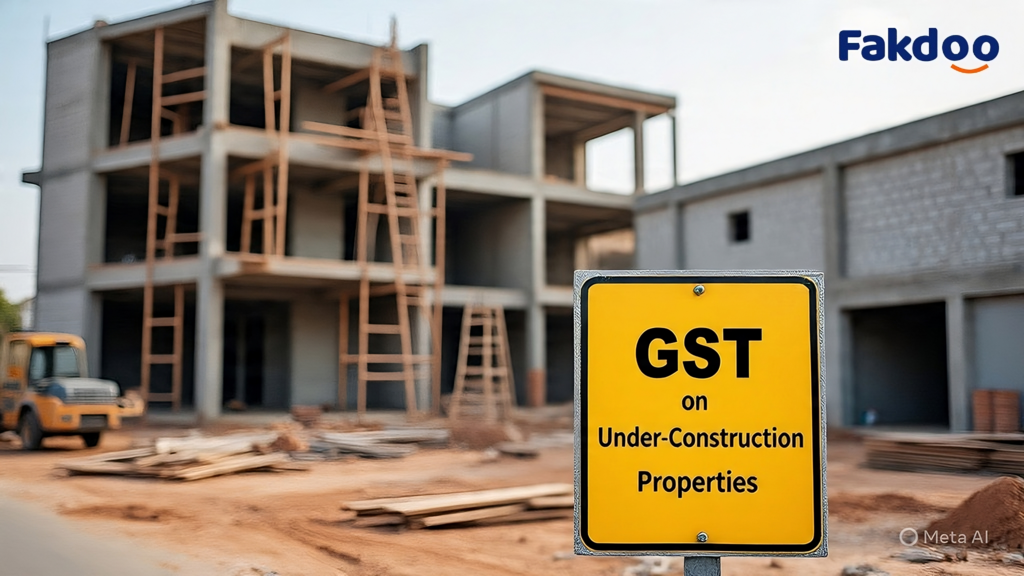
2025 GST Overview for Buyers Investing in Under-Construction Properties
GST on Under-Construction Properties: 2025 Guide

When buying a property, especially one that is still under construction, understanding the applicable taxes is crucial. One of the major taxes homebuyers must consider is the Goods and Services Tax (GST). GST significantly impacts the overall cost of purchasing an under-construction property, and knowing the latest rules in 2025 can help you plan your finances better.
In this guide, we’ll cover everything you need to know about GST on under-construction properties in 2025.
What Is GST on Under-Construction Properties?
GST is a comprehensive indirect tax levied on the supply of goods and services across India. For real estate, GST applies primarily to the sale of under-construction properties. Completed or ready-to-move-in properties are generally exempt from GST, as the tax on them is covered under the Registration Charges and Stamp Duty during ownership transfer.
GST Rates for Under-Construction Properties in 2025
The current GST rates for under-construction properties are as follows:
Affordable housing typically refers to properties with a carpet area of up to 60 sq. meters in metropolitan cities (population over 10 lakhs) or 90 sq. meters in other cities, with a price cap defined by government notifications.
These rates have remained stable in recent years, including 2025.
When Does GST Apply?
GST applies when you purchase a property before the issuance of the Completion Certificate (CC) or Occupancy Certificate (OC). The builder or developer must charge GST on:
Once the property is ready for possession and a completion certificate is issued, GST no longer applies on the sale. Instead, the transaction is subject to stamp duty and registration charges.
What About Input Tax Credit (ITC)?
Buyers cannot claim Input Tax Credit (ITC) on GST paid for residential properties. This means the GST you pay is a cost added to the property price, with no tax credit available.
Builders, however, can claim ITC for the GST paid on construction materials and services used in the project, which is why GST on properties is charged without ITC for buyers.
How Does GST Impact Your Property Cost?
Because GST is charged at 1% or 5% on the sale value, it adds a significant amount to the overall property cost. For example, on a property worth ₹50 lakhs:
This makes it important for buyers to budget for GST when planning their purchase of under-construction properties.
GST and Other Charges: What to Expect
Besides GST, buyers need to be aware of other common costs:
Important Tips for Homebuyers in 2025
Conclusion
GST plays a key role in the pricing and taxation of under-construction properties in India, including in 2025. Homebuyers must understand the rates, applicability, and impact of GST to avoid surprises and plan their budgets accordingly.
By staying informed and working closely with your builder and legal advisors, you can navigate the GST landscape smoothly and make smarter property decisions.

Buying your dream home in Gujarat just got easier with the Pradhan Mantri Awas Yojana (PMAY) — a government scheme offering home loan subsidies for eligible applicants. Whether you're a first-time homebuyer or looking to make housing more affordable, this blog will guide you step-by-step on how to apply for a home loan subsidy in Gujarat.
What is a Home Loan Subsidy?
A home loan subsidy is a financial assistance provided by the government under schemes like PMAY. Through this, eligible individuals get interest rate reductions on home loans making monthly EMIs much more affordable.
The Credit Linked Subsidy Scheme (CLSS) under PMAY is specifically designed for this purpose.
Who is Eligible for Home Loan Subsidy in Gujarat?
You can apply for the PMAY subsidy if:
Documents Required to Apply
Step-by-Step: How to Apply for Home Loan Subsidy in Gujarat
Step 1: Check Your Eligibility
Visit the PMAY official website and use the eligibility calculator. Choose your income category.
Step 2: Apply for a Home Loan
Approach any of the PMAY-partnered banks or NBFCs in Gujarat. Some common ones:
Ask them to process your home loan under PMAY-CLSS.
Step 3: Submit Required Documents
Provide your Aadhaar, income proof, and property documents along with your loan application. Make sure your Aadhaar is linked correctly to avoid rejection.
Step 4: Wait for Loan Sanction
Once your loan is sanctioned, the bank forwards your application for subsidy to the Central Nodal Agency (CNA) like NHB or HUDCO.
Step 5: Subsidy is Credited
If approved, the subsidy amount is directly credited to your loan account. This reduces your principal amount, and you pay lower EMIs!
Where to Get Help in Gujarat?
You can also visit your nearest ULB (Urban Local Body) office or Jan Seva Kendra in cities like:
They can help you with:
Tip: Apply Online (Directly via PMAY)
If you’ve already taken a loan and your bank didn’t apply the subsidy, you can register your details at: https://pmaymis.gov.in/
Conclusion:
Applying for a home loan subsidy in Gujarat is not complicated — but timing and documentation are critical. Take advantage of this scheme if you meet the criteria, and make your dream home more affordable.

Buying agricultural land in Gujarat can be a smart investment but it's not as simple as just choosing a plot and making the payment. The state has specific rules and legal frameworks that buyers must follow, especially if they are not farmers or residents of Gujarat. Whether you’re a resident, NRI, or investor, understanding these laws is essential to ensure your purchase is legal and future-proof.
In this blog, we break down Gujarat's agricultural land laws in a simple, buyer-friendly format.
Who Can Buy Agricultural Land in Gujarat?
Not everyone is eligible to buy agricultural land in Gujarat. As per the Bombay Tenancy and Agricultural Lands Act, 1948, which is still applicable in Gujarat:
Exception:
The District Collector has the power to grant special permission to non-farmers to purchase agricultural land for specific purposes (e.g., agro-tourism, greenhouse farming, etc.), but this involves a lengthy and uncertain approval process.
Required Documents for Purchase
To buy agricultural land legally, you'll need the following documents:
Key Legal Restrictions
Process of Buying Agricultural Land
Can You Convert Agricultural Land to NA Land?
Yes, but only with approval. You must apply to the District Collector for NA permission. Once approved, the land can legally be used for non-agricultural purposes like construction, industry, or commercial projects.
Legal Risks if Rules Are Ignored
Tips for Safe Land Purchase in Gujarat
Conclusion:
Gujarat offers fertile and high-potential agricultural land, but buying it legally requires careful navigation of state laws. If you’re a genuine farmer or planning to invest in agriculture, staying informed and compliant is the best way forward. Always prioritize due diligence over shortcuts to avoid legal trouble.

Gujarat, known for its vibrant culture and rapid industrial growth, is now making waves in another sector — coastal real estate. With over 1,600 km of coastline, Gujarat boasts one of the longest shorelines in India, touching iconic places like Diu, Dwarka, Mandvi, Porbandar, and Hazira. Today, these regions are not just tourist attractions but emerging real estate hotspots of Gujarat.
Whether you’re an investor, a retiree dreaming of a seaside home, or someone eyeing long-term value, the rise of coastal real estate in Gujarat offers promising opportunities.
Why Coastal Gujarat Is Gaining Real Estate Attention
1. Strategic Infrastructure Development
2. Rising Demand for Holiday Homes & Eco-Resorts
3. Affordable Property Rates
Top Coastal Hotspots in Gujarat for Real Estate Investment
Diu (Though UT, Real Estate Around It Booms)
Mandvi (Kutch Region)
Dwarka (Devbhoomi Dwarka)
Hazira & Dahej (Industrial + Coastal Blend)
Government Support & Real Estate Policies
Challenges to Watch
Conclusion: A Rising Tide of Opportunity
The coastal real estate boom in Gujarat is no longer a hidden secret. With solid government backing, increasing tourism, and affordable pricing, now is the right time to explore the property potential along Gujarat's beautiful shoreline. Whether for investment, leisure, or retirement the coast of Gujarat is calling.

India’s first bullet train project the Mumbai-Ahmedabad High-Speed Rail Corridor is more than just a leap in transportation. It’s a signal of rapid development, and Gujarat stands to gain not just in connectivity, but also in real estate growth, global attention, and long-term investments.
In this blog, we explore how this historic infrastructure project is transforming Gujarat’s property market, attracting international interest, and unlocking new opportunities for developers, investors, and homebuyers.
Project Overview: Mumbai-Ahmedabad Bullet Train
The bullet train will cut travel time between Mumbai and Ahmedabad from 8 hours to just 2–3 hours—a game changer for business and tourism alike.
Real Estate Impact on Gujarat
1. Rising Demand in Bullet Train Cities
Cities like Surat, Vadodara, and Ahmedabad are already seeing increased interest from both residential and commercial investors. Areas near bullet train stations are becoming hot property zones.
2. Appreciation of Land Prices
Land values around proposed station zones (like Sabarmati and Anand) have seen a noticeable spike, with some regions reporting 15–25% appreciation in the past two years.
3. Boost to Commercial Real Estate
With improved inter-city connectivity, businesses are setting up corporate offices and logistics hubs in Gujarat. This creates a ripple effect on office space demand and retail development.
4. Increased NRI and Global Investment
The bullet train has caught the attention of global investors and NRIs, especially those from the USA, UK, and Gulf countries, who are now seeing Gujarat as a high-return, low-risk investment hub.
Global Interest in Gujarat’s Infrastructure Boom
Opportunities for Real Estate Developers
Gujarat Property Market: What to Expect
Conclusion:
The Mumbai-Ahmedabad bullet train is not just a transport project—it's a catalyst for Gujarat’s real estate boom. From land appreciation to international investor confidence, the project is redefining how the world sees Gujarat.
Whether you're a real estate investor, developer, or homebuyer, this is the time to keep your eyes on Gujarat. As the tracks are laid, so are the foundations for a future of growth, connectivity, and opportunity

Gujarat, known for its industrial strength and forward-thinking infrastructure, is experiencing a real estate renaissance — largely fueled by the expansion of GIFT City (Gujarat International Finance Tec-City). As India’s first operational smart city and international financial services centre (IFSC), GIFT City is not just transforming Gandhinagar’s skyline but also reshaping the future of Gujarat’s real estate landscape.
In this blog, we’ll explore how GIFT City’s expansion is impacting real estate in Gujarat — from housing and commercial investments to infrastructural development and employment growth.
What is GIFT City?
GIFT City is a visionary project by the Government of Gujarat, aimed at creating a global financial and technology hub. With state-of-the-art infrastructure, tax incentives, world-class amenities, and a robust regulatory framework, it competes with major financial centres like Dubai, Singapore, and London.
Key features include:
Real Estate Boom Around GIFT City
1. Surge in Residential Demand
With thousands of professionals expected to work in GIFT City, the demand for quality housing nearby has skyrocketed. Areas like Gandhinagar, Raysan, Randesan, and parts of North Ahmedabad are seeing:
2. Commercial and Office Space Growth
Many MNCs and financial institutions are setting up offices in GIFT City. This is driving the demand for:
3. Retail and Hospitality Expansion
To support the growing population and workforce:
Itment Opportunities
The GIFT City expansion presents lucrative investment opportunities across all real estate sectors:
Infrastructure Development as a Catalyst
The Gujarat government is actively investing in infrastructure to complement GIFT City:
These improvements are pushing real estate growth further, particularly in the Ahmedabad-Gandhinagar corridor.
GIFT City’s Global Appeal and Policy Push
Government policies such as:
are attracting global investors and developers, making Gujarat a hotspot for international real estate investment.
Final Thoughts
The expansion of GIFT City has turned Gujarat into one of India’s most promising real estate destinations. From being an industrial state to now a global financial hub, Gujarat is offering sustainable, futuristic, and high-return real estate opportunities.
Whether you're a first-time homebuyer, a seasoned investor, or a real estate developer, now is the time to explore Gujarat — not just for what it is, but for what it is rapidly becoming.
Tip for Investors:
Focus on areas within 10-15 km radius of GIFT City for optimal growth in the next 5-10 years. Residential plots, commercial spaces, and rental-focused flats are in high demand and can yield excellent returns.

Dholera is more than just a name weit’s India’s vision of a technologically advanced, sustainable, and future-ready urban space. As the first planned smart city of India, Dholera is leading the country toward a new era of infrastructure development and economic growth. Located in Gujarat, this ambitious project under the Delhi-Mumbai Industrial Corridor (DMIC) is gaining significant attention from investors, industries, and real estate developers.
Where is Dholera Located?
Dholera is strategically located about 100 km southwest of Ahmedabad in Gujarat. It lies within the Dholera Special Investment Region (SIR), covering over 920 sq. km—making it one of the largest greenfield smart city projects in India.
What Makes Dholera India’s First Planned Smart City?
Dholera was not an upgrade of an existing city but a city designed and developed from scratch, integrating smart technologies and sustainable planning from the ground up. Here's what makes it stand out:
1. Integrated Infrastructure
2. World-Class Transport Connectivity
3. Environment-Friendly Urban Planning
4. Smart Governance
Investment Opportunities in Dholera
Dholera offers vast potential for investors and businesses. Key sectors include:
With 100% FDI approval, single-window clearance, and proactive state policies, Dholera is a hotbed for domestic and global investors.
Residential and Commercial Projects
Leading developers are already launching plots, villas, apartments, and commercial spaces in Dholera. Property prices are still affordable compared to metro cities, making this the right time to invest.
Current Development Status (2025 Update)
Dholera’s Future Vision
By 2040, Dholera is expected to host:
Over 2 million residents
Over 800,000 jobs
Smart mobility (EVs, autonomous transport)
Global-standard urban services
Why You Should Keep an Eye on Dholera
Long-term capital appreciation
Smart living and work environment
Sustainable and tech-driven infrastructure
First-mover advantage for early investors
Conclusion:
Dholera isn’t just a smart city—it’s a symbol of India’s urban transformation. Whether you're a homebuyer, investor, entrepreneur, or policymaker, Dholera offers limitless potential for the future. Don’t miss your chance to be a part of India’s most ambitious city project.

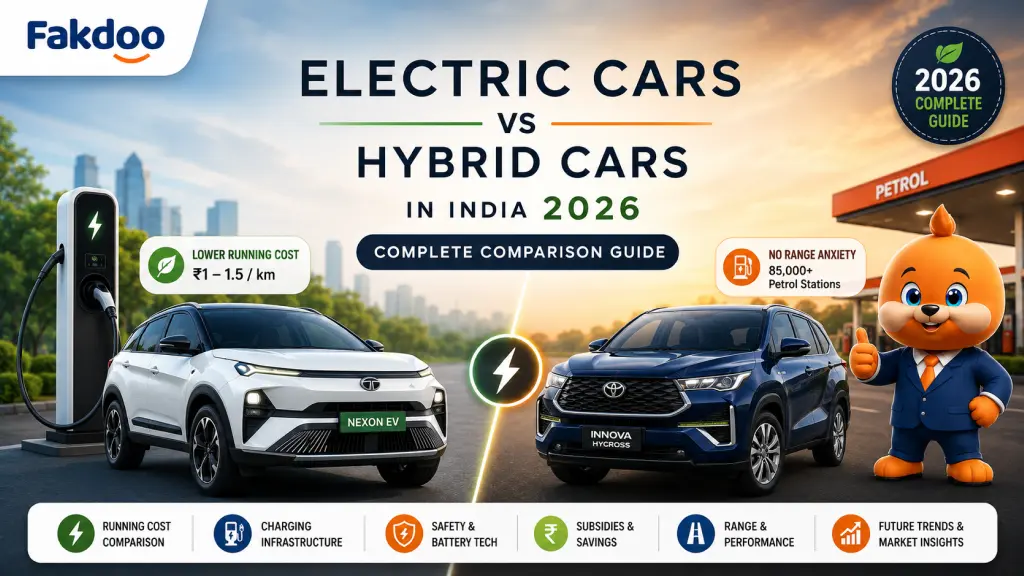
India’s automobile market is at a pivotal moment with petrol prices exceeding Rs 100/litre, stricter BS6 Phase II norms, and growing EV charging infrastructure. Buyers in 2026 face the key decision: buy an electric car or choose a hybrid?
Key Stats for India EV Market 2026:
TYPES OF HYBRID VEHICLES
Hybrid cars combine a petrol engine with an electric motor and battery, with four main types in India:
Mild Hybrid (MHEV):
Full Hybrid / Strong Hybrid (HEV):
Plug-in Hybrid (PHEV):
Series Hybrid (Range Extender):
MOST POPULAR ELECTRIC CAR BRANDS IN INDIA 2026
Tata Motors (Market Leader):
MG Motor (Best Value):
Hyundai (Best Features):
BYD (Best Range & Safety):
Kia (Premium EV):
Mercedes-Benz (Luxury EV):
EV CHARGING INFRASTRUCTURE IN INDIA 2026
AC Slow Charging (Level 2):
DC Fast Charging (Level 3):
BENEFITS OF HYBRID CARS IN INDIA
PLUG-IN HYBRID (PHEV) VS BATTERY ELECTRIC VEHICLE (BEV)
PHEV:
BEV:
Verdict for 2026: BEVs are best for urban users with home charging; hybrids/PHEVs better for long-distance or limited charging areas.
ELECTRIC VEHICLE BATTERY TECHNOLOGY 2026
LFP (Lithium Iron Phosphate):
NMC (Nickel Manganese Cobalt):
BYD Blade Battery:
Solid-State Batteries:
Warranty:
Thermal Management:
FUTURE OF HYBRID CARS IN INDIA 2026 AND BEYOND
Industry Commitments:
Toyota 10 lakh electrified vehicles by 2030; Maruti hybrid upgrades; Tata Rs 15,000 crore EV investment; government policies accelerating transition.
Why hybrids still matter:
India’s grid is 58% fossil-fuel based; hybrids reduce emissions without stressing batteries in extreme heat; practical for majority of buyers outside metros.
FAQ ELECTRIC CAR VS HYBRID CAR INDIA 2026
Q1: Which is cheaper to run?
EVs Rs 1–1.5/km; hybrids Rs 1.8–2.5/km; petrol Rs 7–9/km. EVs win if you have home charging.
Q2: Can I charge an EV at home?
Yes, via standard socket (slow) or dedicated 7.4 kW charger (fast, 6–8 hrs).
Q3: Longest-range EV in India 2026?
BYD Atto 3 (521 km), Hyundai Creta Electric (473 km), Kia EV6 (528 km), Mercedes EQS (700+ km).
Q4: Is hybrid better than petrol?
Yes, 40–50% better fuel efficiency and 25–40% lower emissions.
Q4: Cheapest EV in India 2026?
Tata Tiago EV at Rs 8.49 lakh (post-subsidy), MG Comet EV at Rs 7.98 lakh.
Q5: Do EVs work in Indian heat?
Models with liquid-cooled batteries (Tata, Hyundai, BYD) perform well; avoid air-cooled in 42°C areas.
Q6: Is EV charging infrastructure enough?
Reliable in metros and highways; improving in Tier 2/3 cities; home charging essential.
Q7: Best hybrid car in India 2026?
Toyota Innova Hycross (family), Maruti Grand Vitara (value), Toyota Camry (executive).
CONCLUSION WHICH TO CHOOSE IN 2026?
Choose BEV if:
Choose Strong Hybrid (HEV) if:
Choose Plug-in Hybrid (PHEV) if:
Bottom line: Both electric and hybrid cars offer cleaner, more efficient alternatives to petrol. The best choice depends on your city, driving pattern, and lifestyle.
India’s clean mobility future is here. Choose your lane.

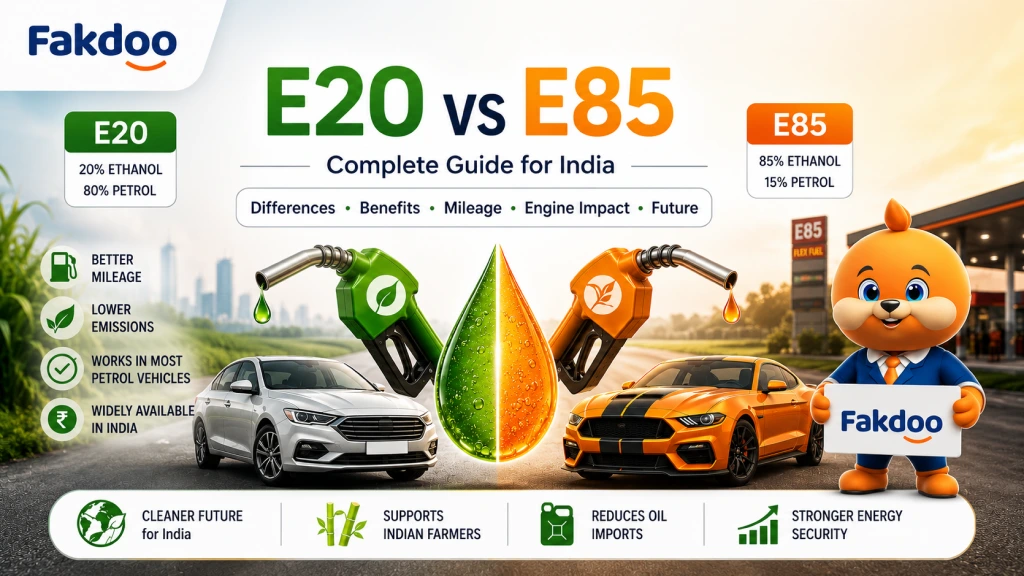
India is moving toward cleaner and more sustainable fuel options, and ethanol blended fuels are
becoming a major part of this transformation. Rising petrol prices, increasing pollution, and
dependence on imported crude oil have pushed the government to promote alternatives like E20 and
E85 fuel. These fuels are designed to reduce emissions, support farmers, and decrease fuel imports.
Many people hear terms like E20 and E85 but do not fully understand what they mean. The concept
is actually simple. The "E" stands for ethanol, while the number represents the percentage of
ethanol mixed with petrol.
Even though both are ethanol blended fuels, they are very different in terms of compatibility,
mileage, engine requirements, and future use in India.
━━━━━━━━━━━━━━━━━━━━━━━━━━━━━━━━━━━━━━
UNDERSTANDING ETHANOL BLENDED FUELS
━━━━━━━━━━━━━━━━━━━━━━━━━━━━━━━━━━━━━━
Ethanol blended fuel is a mixture of petrol and ethanol used in vehicles with internal combustion
engines. Ethanol is a biofuel made mainly from sugarcane, maize, and other agricultural products.
Since ethanol comes from plant-based sources, it is considered renewable and cleaner than
traditional fossil fuels.
India is one of the world's largest sugarcane producers, making ethanol production more practical
for the country. By blending ethanol with petrol, India can reduce crude oil imports while
supporting farmers and rural industries.
Some key benefits of ethanol blended fuels include:
• Reduced dependence on imported oil
• Lower vehicle emissions
• Better energy security
• Support for Indian agriculture
• Cleaner combustion compared to pure petrol
Countries like Brazil and the United States have already adopted ethanol fuels on a large scale.
India is now following a similar path through aggressive ethanol blending programs.
━━━━━━━━━━━━━━━━━━━━━━━━━━━━━━━━━━━━━━
WHAT IS ETHANOL FUEL?
━━━━━━━━━━━━━━━━━━━━━━━━━━━━━━━━━━━━━━
Ethanol fuel is alcohol-based fuel used either independently or mixed with petrol. It is produced
through the fermentation of crops rich in sugar and starch.
The production process includes:
1. Collecting sugarcane or grain-based raw materials
2. Fermentation process to create alcohol
3. Distillation and purification
4. Blending with petrol
Ethanol contains oxygen, which helps fuel burn more efficiently inside the engine. This cleaner
combustion reduces certain harmful emissions released from vehicles.
However, ethanol also has lower energy density compared to petrol. This means vehicles may
consume slightly more fuel when using higher ethanol blends.
━━━━━━━━━━━━━━━━━━━━━━━━━━━━━━━━━━━━━━
WHY INDIA IS PROMOTING ETHANOL BLENDING
━━━━━━━━━━━━━━━━━━━━━━━━━━━━━━━━━━━━━━
India imports a massive amount of crude oil every year. Global fuel price fluctuations directly
affect petrol and diesel prices in the country. Ethanol blending helps reduce this dependence.
The Indian government is promoting ethanol because it offers multiple advantages:
• Reduces oil import expenses
• Improves energy independence
• Supports farmers through ethanol production
• Lowers harmful vehicle emissions
• Strengthens rural economies
The government's Ethanol Blended Petrol Programme (EBP) has already achieved major progress.
India is rapidly moving toward higher ethanol blending targets to improve fuel sustainability.
━━━━━━━━━━━━━━━━━━━━━━━━━━━━━━━━━━━━━━
WHAT IS E20 FUEL?
━━━━━━━━━━━━━━━━━━━━━━━━━━━━━━━━━━━━━━
E20 is a fuel blend containing 20% ethanol and 80% petrol. It is currently the main ethanol blend
being promoted for regular passenger vehicles in India.
The biggest advantage of E20 is that many modern petrol vehicles can use it with minimal
modifications. This makes it easier for India to adopt E20 nationwide without massive
infrastructure changes.
Key Features of E20 Fuel:
• Contains 20% ethanol
• Compatible with many new petrol vehicles
• Lower emissions compared to normal petrol
• Helps reduce fuel imports
• Easier transition for consumers
E20 is considered a practical middle-ground solution because it balances sustainability and
vehicle compatibility.
VEHICLES COMPATIBLE WITH E20
─────────────────────────────
Most newly manufactured petrol cars and bikes in India are now designed for E20 compatibility.
Major automobile companies are already updating engines and fuel systems accordingly.
Brands supporting E20-ready vehicles include:
Maruti Suzuki | Honda | Tata Motors | ToyotaHyundai | Bajaj | TVS
Older vehicles may still run on E20, but long-term usage depends on engine design and fuel
system materials.
Possible issues in incompatible vehicles include:
• Reduced mileage
• Fuel line corrosion
• Engine knocking
• Increased maintenance
Vehicle owners should always check the manufacturer's recommendation before using higher
ethanol blends.
━━━━━━━━━━━━━━━━━━━━━━━━━━━━━━━━━━━━━━
WHAT IS E85 FUEL?
━━━━━━━━━━━━━━━━━━━━━━━━━━━━━━━━━━━━━━
E85 is a high-ethanol fuel blend containing 85% ethanol and 15% petrol. Unlike E20, E85 requires
specially designed engines known as Flex-Fuel Vehicles (FFVs).
E85 is much cleaner than regular petrol and significantly reduces fossil fuel usage. However, it
is not suitable for standard petrol engines.
Key Features of E85 Fuel:
Countries like Brazil widely use E85 and similar ethanol-rich fuels, but India is still in the
early stages of adoption.
──────────────────────────────────────────
FLEX-FUEL VEHICLES AND E85 COMPATIBILITY
──────────────────────────────────────────
Flex-fuel vehicles are specially engineered to run on multiple ethanol-petrol blends, including
E20 and E85.
These vehicles use:
The biggest advantage of flex-fuel vehicles is flexibility. Drivers can use petrol, ethanol
blends, or a combination depending on availability and pricing.
However, E85 adoption in India still faces challenges such as:
━━━━━━━━━━━━━━━━━━━━━━━━━━━━━━━━━━━━━━
E20 VS E85: MAJOR DIFFERENCES
━━━━━━━━━━━━━━━━━━━━━━━━━━━━━━━━━━━━━━
Although both fuels contain ethanol, E20 and E85 differ significantly.
FUEL COMPOSITION :
E20 → 20% ethanol + 80% petrol
E85 → 85% ethanol + 15% petrol
VEHICLE COMPATIBILITY:
E20 → Works with many modern petrol vehicles
E85 → Requires flex-fuel vehicles
MILEAGE DIFFERENCE:
E20 → Causes only slight mileage reduction
E85 → Reduces mileage more because ethanol has lower energy density
ENVIRONMENTAL IMPACT:
E20 → Reduces emissions moderately
E85 → Provides much greater emission reduction
INFRASTRUCTURE REQUIREMENT:
E20 → Needs minimal infrastructure changes
E85 → Requires major fuel distribution upgrades
For India's current conditions, E20 is more practical for mass adoption, while E85 represents
a future-focused fuel solution.
━━━━━━━━━━━━━━━━━━━━━━━━━━━━━━━━━━━━━━
ADVANTAGES OF E20 FUEL
━━━━━━━━━━━━━━━━━━━━━━━━━━━━━━━━━━━━━━
E20 offers several benefits for Indian consumers and the economy.
Benefits of E20:
For most consumers, E20 provides a cleaner fuel option without requiring major changes in
vehicle ownership or driving habits.
━━━━━━━━━━━━━━━━━━━━━━━━━━━━━━━━━━━━━━
ADVANTAGES OF E85 FUEL
━━━━━━━━━━━━━━━━━━━━━━━━━━━━━━━━━━━━━━
E85 offers even greater environmental advantages because of its high ethanol content.
Benefits of E85:
E85 can also improve performance in certain high-compression engines due to ethanol's naturally
high octane properties.
━━━━━━━━━━━━━━━━━━━━━━━━━━━━━━━━━━━━━━
CHALLENGES OF ETHANOL BLENDED FUELS IN INDIA
━━━━━━━━━━━━━━━━━━━━━━━━━━━━━━━━━━━━━━
Despite the advantages, ethanol blending also comes with challenges.
Major Challenges:
• Limited awareness among consumers
• Compatibility concerns in older vehicles
• Lower mileage in high ethanol blends
• Infrastructure limitations
• Water-intensive crop dependency
• Need for flex-fuel vehicle expansion
Balancing food production and ethanol manufacturing is another long-term concern because
ethanol relies heavily on agricultural resources.
━━━━━━━━━━━━━━━━━━━━━━━━━━━━━━━━━━━━━━
GOVERNMENT POLICIES AND ETHANOL MISSION
━━━━━━━━━━━━━━━━━━━━━━━━━━━━━━━━━━━━━━
India's ethanol roadmap is driven by strong government initiatives focused on cleaner mobility
and reduced oil imports.
━━━━━━━━━━━━━━━━━━━━━━━━━━━━━━━━━━━━━━
INDIA'S ETHANOL BLENDING PROGRAM
━━━━━━━━━━━━━━━━━━━━━━━━━━━━━━━━━━━━━━
The Ethanol Blended Petrol Programme aims to increase ethanol usage across India.
Key objectives include:
India has already achieved significant progress toward higher ethanol blending targets.
───────────────────────────
FUTURE GOALS FOR BIOFUELS
───────────────────────────
India plans to expand biofuel adoption in the coming years through:
• Flex-fuel vehicle promotion
• Increased ethanol production
• Stronger fuel infrastructure
• Cleaner transportation systems
• Investment in renewable energy technologies.
The long-term goal is to make India less dependent on imported fossil fuels.
━━━━━━━━━━━━━━━━━━━━━━━━━━━━━━━━━━━━━━
IS E20 OR E85 BETTER FOR INDIAN CONSUMERS?
━━━━━━━━━━━━━━━━━━━━━━━━━━━━━━━━━━━━━━
For most Indian consumers today, E20 is the more practical choice.
Why E20 Is Better Currently:
E85 is more suitable for future adoption when flex-fuel vehicles become more common in India.
━━━━━━━━━━━━━━━━━━━━━━━━━━━━━━━━━━━━━━
FUTURE OF ETHANOL FUELS IN INDIA
━━━━━━━━━━━━━━━━━━━━━━━━━━━━━━━━━━━━━━
India's future fuel strategy will likely include:
Ethanol fuels will play a major role during the transition toward cleaner transportation. As
infrastructure improves and flex-fuel vehicles increase, higher ethanol blends may become
more common.
━━━━━━━━━━━━━━━━━━━━━━━━━━━━━━━━━━━━━━
CONCLUSION
━━━━━━━━━━━━━━━━━━━━━━━━━━━━━━━━━━━━━━
E20 and E85 fuels represent important steps toward cleaner and more sustainable transportation
in India. While E20 is designed for immediate large-scale adoption, E85 showcases the long-term
future of renewable fuel technology.
India's ethanol mission is not just about fuel — it is about reducing imports, supporting
farmers, improving air quality, and building energy security. Although challenges remain,
ethanol blended fuels are expected to become a major part of India's automotive future.
For everyday consumers, understanding the differences between E20 and E85 is important before
choosing fuel options or buying future vehicles.
━━━━━━━━━━━━━━━━━━━━━━━━━━━━━━━━━━━━━━
FAQs
━━━━━━━━━━━━━━━━━━━━━━━━━━━━━━━━━━━━━━
1. Can regular petrol cars use E20 fuel?
Most modern petrol vehicles can use E20 fuel, but older vehicles should follow
manufacturer recommendations.
2. Is E85 available in India?
E85 availability is currently limited because India's flex-fuel infrastructure is
still developing.
3. Does ethanol reduce mileage?
Yes, higher ethanol blends may slightly reduce mileage because ethanol contains lower
energy density than petrol.
4. What is a flex-fuel vehicle?
A flex-fuel vehicle can run on multiple ethanol-petrol blends, including E85.
5. Is ethanol fuel environmentally friendly?
Yes, ethanol burns cleaner than petrol and helps reduce harmful vehicle emissions.

The Complete Guide to Solar Power in India (2026)
Solar Energy | Panels | Subsidies | Costs | Benefits | Future Trends
Updated June 2026
India has crossed 150 GW of renewable energy capacity.
Rooftop solar alone grew by 122% in 2025.
Over 32 lakh households are already running on solar.
If you are still paying high electricity bills every month, this guide is for you.
━━━━━━━━━━━━━━━━━━━━━━━━━━━━━━━━━━━━━━
WHAT YOU WILL LEARN IN THIS GUIDE
━━━━━━━━━━━━━━━━━━━━━━━━━━━━━━━━━━━━━━
→ How solar panels actually work
→ Which system is right for your home or business
→ Exact costs in 2025-26 (before and after subsidy)
→ How to claim PM Surya Ghar subsidy
→ PM KUSUM scheme for farmers
→ Solar + EV charging at home
→ Battery storage options and prices
→ Real ROI and payback period calculations
→ Challenges and how to avoid them
→ What the future of solar looks like in India
━━━━━━━━━━━━━━━━━━━━━━━━━━━━━━━━━━━━━━
HOW SOLAR PANELS WORK (SIMPLY EXPLAINED)
━━━━━━━━━━━━━━━━━━━━━━━━━━━━━━━━━━━━━━
Solar panels are made of silicon cells. When sunlight hits them, they generate electricity. That is the core idea.
Here is the full flow:
A complete system includes:
Most quality panels last 25 to 30 years. Maintenance is minimal — just regular cleaning and one annual check-up.
━━━━━━━━━━━━━━━━━━━━━━━━━━━━━━━━━━━━━━
3 TYPES OF SOLAR SYSTEMS — WHICH ONE IS FOR YOU?
━━━━━━━━━━━━━━━━━━━━━━━━━━━━━━━━━━━━━━
1. ON-GRID SYSTEM
Best for: Urban homes and offices with stable electricity supply
How it works: Connected to the grid. Exports surplus power. Earns bill credits.
Cost: Most affordable option — no battery needed.
2. OFF-GRID SYSTEM
Best for: Villages, farms, and areas with frequent power cuts
How it works: Fully independent. Runs on battery storage.
Cost: Higher upfront due to battery investment.
3. HYBRID SYSTEM
Best for: Urban homes that want both grid benefits and backup power
How it works: Connected to grid AND has battery backup.
Cost: Higher than on-grid but most reliable option.
→ If you live in a city with occasional outages, hybrid is the smart choice in 2026.
━━━━━━━━━━━━━━━━━━━━━━━━━━━━━━━━━━━━━━
SOLAR PANEL COST IN INDIA (2025-26)
━━━━━━━━━━━━━━━━━━━━━━━━━━━━━━━━━━━━━━
Prices before subsidy:
After PM Surya Ghar subsidy, a 3 kW system can cost as low as Rs 1.3 lakh.
Typical payback period: 4 to 6 years.
Free electricity after that: 20+ years. Adding battery storage:
5–10 kWh LFP battery → Rs 80,000 to Rs 2 lakh extra
(Battery prices have dropped 40% in 3 years and are still falling.)
━━━━━━━━━━━━━━━━━━━━━━━━━━━━━━━━━━━━━━
GOVERNMENT SUBSIDIES IN INDIA (2026)
━━━━━━━━━━━━━━━━━━━━━━━━━━━━━━━━━━━━━━
PM SURYA GHAR MUFT BIJLI YOJANA
This is the biggest residential solar scheme in India right now.
Key facts:
• 32 lakh+ households already benefited (as of March 2026)
• Rs 14,771 crore disbursed to date
• Drives 60%+ of all new residential solar installs
Subsidy structure:
Documents you need:
State-wise extras:
Gujarat, Maharashtra, and Rajasthan offer additional state-level subsidies
on top of the central scheme. Check your state DISCOM portal for 2026 updates.
Always choose an empanelled installer. Subsidies are only available through registered vendors.
━━━━━━━━━━━━━━━━━━━━━━━━━━━━━━━━━━━━━━
PM KUSUM SCHEME — SOLAR FOR FARMERS
━━━━━━━━━━━━━━━━━━━━━━━━━━━━━━━━━━━━━━
If you are a farmer, this scheme is specifically for you.
PM KUSUM helps farmers:
• Replace diesel water pumps with solar pumps
• Set up small solar power plants on barren land
• Sell surplus electricity to DISCOMs and earn extra income
Subsidy available: Up to 60% on solar pump installations.
3 components of the scheme:
Component A — Solar power plants (up to 2 MW) on unused land, grid-connected
Component B — Stand-alone solar water pumps (up to 7.5 HP)
Component C — Solarisation of existing grid-connected pumps
Top states for PM KUSUM: Rajasthan, Maharashtra, Madhya Pradesh, Uttar Pradesh.
How to apply: Search "PM KUSUM apply online [your state name]" on your
state agriculture department or DISCOM portal.
━━━━━━━━━━━━━━━━━━━━━━━━━━━━━━━━━━━━━━
YOUR SOLAR ROI — REAL NUMBERS
━━━━━━━━━━━━━━━━━━━━━━━━━━━━━━━━━━━━━━
Monthly bill of Rs 1,500–2,000?
Monthly bill of Rs 2,500–4,000?
Monthly bill of Rs 4,000–6,000?
Monthly bill above Rs 6,000?
→ 8–10 kW system | Net cost ~Rs 4–5 lakh | Annual savings ~Rs 80,000–1 lakh
→ Payback: 5–6 years
Note: Estimates based on average tariff of Rs 7–8 per unit. Actual savings
depend on your location, system efficiency, and shading on your roof.
━━━━━━━━━━━━━━━━━━━━━━━━━━━━━━━━━━━━━━
SOLAR + EV CHARGING AT HOME (2026 TREND)
━━━━━━━━━━━━━━━━━━━━━━━━━━━━━━━━━━━━━━
EV owners are paying Rs 6–8 per km in electricity costs using grid power.
With solar, that drops to Rs 0.50–1 per km.
Which solar system do you need for EV charging?
2-Wheeler EV (1–2 units/day) → 3–5 kW solar system
Small Car EV (4–8 units/day) → 5–8 kW + battery recommended
Large/Premium EV (10–15 units/day) → 8–10 kW + battery essential
Why this matters in 2026:
Tata Power, Ather Energy, and ChargePoint are already offering
bundled solar + EV home charging solutions.
━━━━━━━━━━━━━━━━━━━━━━━━━━━━━━━━━━━━━━
SOLAR FINANCING — NO UPFRONT MONEY NEEDED
━━━━━━━━━━━━━━━━━━━━━━━━━━━━━━━━━━━━━━
You do not need to pay everything upfront. Here are your options:
Bank of Baroda → Collateral-free loan up to Rs 10 lakh
Tata Power Finance → Zero down payment options for homes
SBI Green Home Loan → Solar included as eligible upgrade
NABARD → Rural solar loans including PM KUSUM
IREDA → For larger residential and commercial projects
PM Surya Ghar Portal → Direct bank linkage for registered beneficiaries
→ Your monthly EMI on a solar loan is often equal to or less than
your current electricity bill. You start saving from Day 1.
━━━━━━━━━━━━━━━━━━━━━━━━━━━━━━━━━━━━━━
BENEFITS AT A GLANCE
━━━━━━━━━━━━━━━━━━━━━━━━━━━━━━━━━━━━━━
FINANCIAL
ENVIRONMENTAL
ENERGY INDEPENDENCE
━━━━━━━━━━━━━━━━━━━━━━━━━━━━━━━━━━━━━━
COMMON CHALLENGES — AND HOW TO HANDLE THEM
━━━━━━━━━━━━━━━━━━━━━━━━━━━━━━━━━━━━━━
Challenge: High upfront cost
Solution: Use PM Surya Ghar subsidy + collateral-free bank loan
Challenge: Living in an apartment with shared roof
Solution: Check if your housing society can install a common system and distribute credits among flat owners
Challenge: Less power during monsoon
Solution: Hybrid system with battery backup covers rainy days
Challenge: Not sure which installer to trust
Solution: Only choose vendors on the ALMM approved list — mandatory for subsidy eligibility and quality assurance
Challenge: Net metering approval delays
Solution: Apply through your DISCOM's dedicated solar helpdesk and follow up with your installation vendor
━━━━━━━━━━━━━━━━━━━━━━━━━━━━━━━━━━━━━━
THE FUTURE OF SOLAR IN INDIA
━━━━━━━━━━━━━━━━━━━━━━━━━━━━━━━━━━━━━━
What is coming next:
Floating solar farms → India targeting 10 GW on reservoirs by 2027
TOPCon & HJT panels → Higher efficiency, lower degradation, PLI-backed
Solar + EV ecosystems → Bundled home energy solutions becoming standard
AI energy management → Smart systems that auto-optimise your usage
Green hydrogen via solar → Industrial decarbonisation by 2028+
Agri-voltaics → Farming and solar generation on the same land
India's target: 500 GW renewable capacity by 2030.
Solar will be the biggest contributor.
━━━━━━━━━━━━━━━━━━━━━━━━━━━━━━━━━━━━━━
QUICK ANSWERS — FREQUENTLY ASKED QUESTIONS
━━━━━━━━━━━━━━━━━━━━━━━━━━━━━━━━━━━━━━
How much does a 3 kW solar system cost in India?
→ Rs 1.8–2.5 lakh before subsidy. Around Rs 1.3–1.8 lakh after PM Surya Ghar subsidy.
Can solar panels run ACs and refrigerators?
→ Yes. A 5 kW system can run 2 ACs plus other household appliances during peak hours.
How long do solar panels last?
→ 25–30 years. Efficiency drops slightly each year but remains very usable throughout.
What is net metering?
→ It lets you export surplus solar power to the grid and receive bill credits from your DISCOM.
Is subsidy available for commercial solar?
→ Not under PM Surya Ghar. Businesses get 40% accelerated depreciation and GST credits instead.
What is PM KUSUM for farmers?
→ Up to 60% subsidy on solar pumps. Farmers can also earn by selling surplus power to DISCOMs.
How many panels to run an AC?
→ A 1.5-ton AC for 8 hours needs roughly 8–10 panels (400W each), a 3.2–4 kW system total.
Can I get a solar loan without collateral?
→ Yes. Bank of Baroda offers up to Rs 10 lakh collateral-free. Several NBFCs offer zero-down EMIs.
Is solar worth it in Rajasthan and Gujarat?
→ Absolutely. Both states have the highest solar irradiance in India and strong state subsidies.
A 3 kW system in Rajasthan generates 450–480 units per month vs the national average of 360–400.
━━━━━━━━━━━━━━━━━━━━━━━━━━━━━━━━━━━━━━
BOTTOM LINE
━━━━━━━━━━━━━━━━━━━━━━━━━━━━━━━━━━━━━━
Solar is no longer a luxury. It is a financial decision.
Whether you are a homeowner, farmer, or business owner — the best time to go solar was five years ago.
The second best time is today.

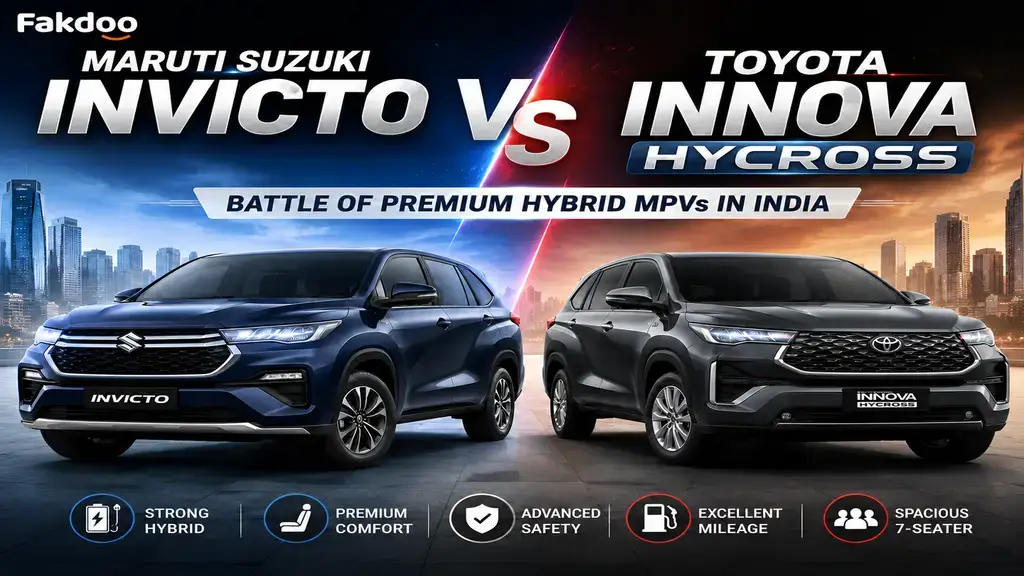
The premium hybrid MPV segment in India is rapidly evolving, with more families seeking vehicles that combine luxury, fuel efficiency, and eco-friendly technology. Two popular models leading this charge are the Maruti Suzuki Invicto and the Toyota Innova Hycross. Both vehicles offer spacious interiors and cutting-edge hybrid powertrains, but each caters to slightly different customer needs.
In this detailed comparison, we explore the key features, performance, safety, pricing, and value of the Maruti Suzuki Invicto vs Toyota Innova Hycross, helping you decide which hybrid MPV best suits your family’s lifestyle.
Overview: Maruti Suzuki Invicto and Toyota Innova Hycross at a Glance
Design & Exterior: Which Hybrid MPV Looks the Best?
The Invicto grabs attention with its bold, contemporary styling and panoramic sunroof, ideal for families who want a premium look without compromise. Meanwhile, the Innova Hycross retains the iconic rugged charm with an elegant finish, appealing to those who prefer a sophisticated yet muscular design.
Interior & Comfort: Space, Features, and Connectivity
Both MPVs provide luxurious cabins equipped with smart tech to keep families comfortable and entertained on long journeys. The Innova Hycross offers more seating flexibility, while the Invicto emphasizes contemporary styling and premium materials.
Performance & Hybrid Technology: Efficient yet Powerful
Safety Features: Keeping Your Family Protected
Both MPVs provide comprehensive safety systems to ensure confidence and protection on the road.
Pricing & Value: Which Hybrid MPV Offers Better Bang for Your Buck?
Which Should You Choose? Final Verdict on Invicto vs Innova Hycross
Conclusion: The Future of Premium Hybrid MPVs in India
The Maruti Suzuki Invicto and Toyota Innova Hycross both represent the future of eco-conscious family travel in India’s premium MPV segment. Whether you value modern technology and efficiency or legacy and robustness, these hybrid MPVs deliver a blend of comfort, safety, and sustainability.
As hybrid technology continues to evolve, these vehicles set new benchmarks for luxury and practicality in Indian family cars.
Ready to make your choice? Consider your budget, seating needs, and brand preference to select the perfect premium hybrid MPV for your family’s next adventure.
Keywords: Maruti Suzuki Invicto, Toyota Innova Hycross, hybrid MPV India, premium hybrid MPVs, Maruti Invicto vs Innova Hycross, hybrid family car India, fuel-efficient MPVs, hybrid SUVs India, eco-friendly family cars India, hybrid MPV comparison
Feel free to share or ask for more updates on the latest in hybrid vehicles and family cars on Fakdoo!

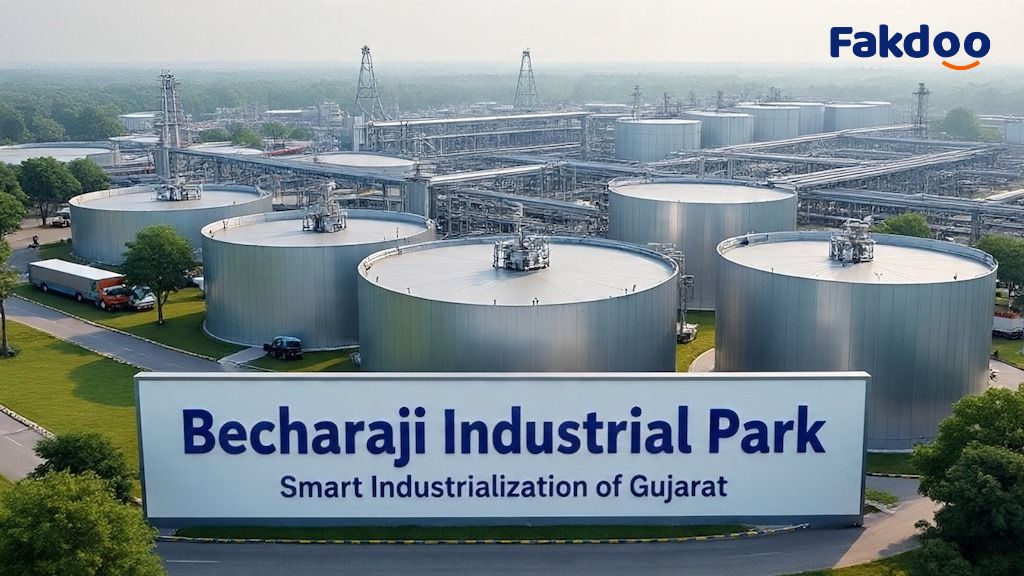
Gujarat has traditionally been India's industrial heartland. With its location at the center of India, investor-friendly policies, and superior infrastructure, the state remains a magnet for large-scale investments in industry and infrastructure. Among the most exciting initiatives in this context is the Becharaji Industrial Park, which lies within the Mandal Becharaji Special Investment Region (MBSIR). This is increasingly becoming a center for smart, sustainable industrialization in Gujarat.
What is Becharaji Industrial Park?
Becharaji Industrial Park is one of the ambitious MBSIR, a Special Investment Region spanning almost 102 square kilometers. It lies in North Gujarat close to Mehsana and is strategically located to cater to strategic industrial corridors, particularly the Delhi-Mumbai Industrial Corridor (DMIC).
The park aims to facilitate intelligent industrial growth by emphasizing the manufacture of automobiles, engineering, electronics, and logistics. The park has some of the big automobile players, including Suzuki Motor Gujarat, which has set up one of its largest production units here.
Major Features of Becharaji Industrial Park
Becharaji is most famous for its automobile cluster, with Suzuki and its Tier-1 and Tier-2 vendors having operations spread across the area. Other industries too, however, are finding a niche space here:
Gujarat provides a strong policy framework with the Gujarat Industrial Policy 2020, offering:
Employment & Economic Impact:
Becharaji Industrial Park is likely to create more than 2 lakh direct and indirect employment opportunities in the coming decade. It is not only an industrial hub but also a catalyst of regional development, elevating neighboring towns and villages with improved infrastructure, education, and employment prospects.
Future Outlook
With continued growth of exclusive freight corridors, intelligent utilities, and public-private partnership models, Becharaji Industrial Park is ready to emerge as a manufacturing hub in the world. Investors who would like to benefit from India's industrial upsurge should find MBSIR a desirable location.
Conclusion:
Becharaji Industrial Park is an example of Gujarat's dedication to smart, inclusive, and sustainable industrialization. You are either an investor, entrepreneur, or policymaker, this park is the future of industrial excellence in India.

The commercial real estate sector is experiencing a strong revival, and 2025 is shaping up to be a landmark year. With shifting business landscapes, expanding industries, and increased investor confidence, the demand for commercial property leases is witnessing a noticeable rise across major cities in India and globally.
Whether you're a business owner, investor, or real estate developer, understanding this surge is crucial to making informed decisions.
Why Is Commercial Leasing on the Rise in 2025?
1. Post-Pandemic Business Expansion
Companies that paused growth plans during the pandemic are now aggressively expanding. From tech startups to logistics giants, businesses are leasing office spaces, warehouses, and retail outlets to meet growing operational needs.
2. Boom in E-commerce and Warehousing
The rapid growth of online shopping has led to higher demand for logistics hubs, warehouses, and distribution centers. Leasing large industrial spaces has become essential for businesses aiming to scale efficiently.
3. Hybrid Work Culture Stabilizing Office Demand
While remote work persists, many organizations are adopting hybrid models. This has fueled demand for flexible office spaces in business districts and co-working hubs in tier-1 and tier-2 cities.
4. Favorable Government Policies
Initiatives like Make in India, Smart Cities Mission, and ease of doing business reforms have encouraged domestic and foreign businesses to set up operations, increasing the leasing activity in commercial zones.
5. Rising Investor Confidence
Real estate investors are seeing commercial property as a stable and high-yield asset. Leasing demand ensures consistent rental income and long-term value appreciation, making it a popular choice in 2025 portfolios.
Key Commercial Segments Driving the Demand
Locations in India Witnessing High Leasing Demand in 2025
Tips for Investors & Businesses
Conclusion:
The commercial leasing market in 2025 is on a steady upward trajectory, driven by economic recovery, evolving work models, and increased investor interest. For anyone looking to lease, invest, or develop commercial property, now is the time to act.

Buying your dream home in Gujarat just got easier with the Pradhan Mantri Awas Yojana (PMAY) — a government scheme offering home loan subsidies for eligible applicants. Whether you're a first-time homebuyer or looking to make housing more affordable, this blog will guide you step-by-step on how to apply for a home loan subsidy in Gujarat.
What is a Home Loan Subsidy?
A home loan subsidy is a financial assistance provided by the government under schemes like PMAY. Through this, eligible individuals get interest rate reductions on home loans making monthly EMIs much more affordable.
The Credit Linked Subsidy Scheme (CLSS) under PMAY is specifically designed for this purpose.
Who is Eligible for Home Loan Subsidy in Gujarat?
You can apply for the PMAY subsidy if:
Documents Required to Apply
Step-by-Step: How to Apply for Home Loan Subsidy in Gujarat
Step 1: Check Your Eligibility
Visit the PMAY official website and use the eligibility calculator. Choose your income category.
Step 2: Apply for a Home Loan
Approach any of the PMAY-partnered banks or NBFCs in Gujarat. Some common ones:
Ask them to process your home loan under PMAY-CLSS.
Step 3: Submit Required Documents
Provide your Aadhaar, income proof, and property documents along with your loan application. Make sure your Aadhaar is linked correctly to avoid rejection.
Step 4: Wait for Loan Sanction
Once your loan is sanctioned, the bank forwards your application for subsidy to the Central Nodal Agency (CNA) like NHB or HUDCO.
Step 5: Subsidy is Credited
If approved, the subsidy amount is directly credited to your loan account. This reduces your principal amount, and you pay lower EMIs!
Where to Get Help in Gujarat?
You can also visit your nearest ULB (Urban Local Body) office or Jan Seva Kendra in cities like:
They can help you with:
Tip: Apply Online (Directly via PMAY)
If you’ve already taken a loan and your bank didn’t apply the subsidy, you can register your details at: https://pmaymis.gov.in/
Conclusion:
Applying for a home loan subsidy in Gujarat is not complicated — but timing and documentation are critical. Take advantage of this scheme if you meet the criteria, and make your dream home more affordable.

Buying agricultural land in Gujarat can be a smart investment but it's not as simple as just choosing a plot and making the payment. The state has specific rules and legal frameworks that buyers must follow, especially if they are not farmers or residents of Gujarat. Whether you’re a resident, NRI, or investor, understanding these laws is essential to ensure your purchase is legal and future-proof.
In this blog, we break down Gujarat's agricultural land laws in a simple, buyer-friendly format.
Who Can Buy Agricultural Land in Gujarat?
Not everyone is eligible to buy agricultural land in Gujarat. As per the Bombay Tenancy and Agricultural Lands Act, 1948, which is still applicable in Gujarat:
Exception:
The District Collector has the power to grant special permission to non-farmers to purchase agricultural land for specific purposes (e.g., agro-tourism, greenhouse farming, etc.), but this involves a lengthy and uncertain approval process.
Required Documents for Purchase
To buy agricultural land legally, you'll need the following documents:
Key Legal Restrictions
Process of Buying Agricultural Land
Can You Convert Agricultural Land to NA Land?
Yes, but only with approval. You must apply to the District Collector for NA permission. Once approved, the land can legally be used for non-agricultural purposes like construction, industry, or commercial projects.
Legal Risks if Rules Are Ignored
Tips for Safe Land Purchase in Gujarat
Conclusion:
Gujarat offers fertile and high-potential agricultural land, but buying it legally requires careful navigation of state laws. If you’re a genuine farmer or planning to invest in agriculture, staying informed and compliant is the best way forward. Always prioritize due diligence over shortcuts to avoid legal trouble.

Gujarat, known for its vibrant culture and rapid industrial growth, is now making waves in another sector — coastal real estate. With over 1,600 km of coastline, Gujarat boasts one of the longest shorelines in India, touching iconic places like Diu, Dwarka, Mandvi, Porbandar, and Hazira. Today, these regions are not just tourist attractions but emerging real estate hotspots of Gujarat.
Whether you’re an investor, a retiree dreaming of a seaside home, or someone eyeing long-term value, the rise of coastal real estate in Gujarat offers promising opportunities.
Why Coastal Gujarat Is Gaining Real Estate Attention
1. Strategic Infrastructure Development
2. Rising Demand for Holiday Homes & Eco-Resorts
3. Affordable Property Rates
Top Coastal Hotspots in Gujarat for Real Estate Investment
Diu (Though UT, Real Estate Around It Booms)
Mandvi (Kutch Region)
Dwarka (Devbhoomi Dwarka)
Hazira & Dahej (Industrial + Coastal Blend)
Government Support & Real Estate Policies
Challenges to Watch
Conclusion: A Rising Tide of Opportunity
The coastal real estate boom in Gujarat is no longer a hidden secret. With solid government backing, increasing tourism, and affordable pricing, now is the right time to explore the property potential along Gujarat's beautiful shoreline. Whether for investment, leisure, or retirement the coast of Gujarat is calling.

India’s first bullet train project the Mumbai-Ahmedabad High-Speed Rail Corridor is more than just a leap in transportation. It’s a signal of rapid development, and Gujarat stands to gain not just in connectivity, but also in real estate growth, global attention, and long-term investments.
In this blog, we explore how this historic infrastructure project is transforming Gujarat’s property market, attracting international interest, and unlocking new opportunities for developers, investors, and homebuyers.
Project Overview: Mumbai-Ahmedabad Bullet Train
The bullet train will cut travel time between Mumbai and Ahmedabad from 8 hours to just 2–3 hours—a game changer for business and tourism alike.
Real Estate Impact on Gujarat
1. Rising Demand in Bullet Train Cities
Cities like Surat, Vadodara, and Ahmedabad are already seeing increased interest from both residential and commercial investors. Areas near bullet train stations are becoming hot property zones.
2. Appreciation of Land Prices
Land values around proposed station zones (like Sabarmati and Anand) have seen a noticeable spike, with some regions reporting 15–25% appreciation in the past two years.
3. Boost to Commercial Real Estate
With improved inter-city connectivity, businesses are setting up corporate offices and logistics hubs in Gujarat. This creates a ripple effect on office space demand and retail development.
4. Increased NRI and Global Investment
The bullet train has caught the attention of global investors and NRIs, especially those from the USA, UK, and Gulf countries, who are now seeing Gujarat as a high-return, low-risk investment hub.
Global Interest in Gujarat’s Infrastructure Boom
Opportunities for Real Estate Developers
Gujarat Property Market: What to Expect
Conclusion:
The Mumbai-Ahmedabad bullet train is not just a transport project—it's a catalyst for Gujarat’s real estate boom. From land appreciation to international investor confidence, the project is redefining how the world sees Gujarat.
Whether you're a real estate investor, developer, or homebuyer, this is the time to keep your eyes on Gujarat. As the tracks are laid, so are the foundations for a future of growth, connectivity, and opportunity

Gujarat, known for its industrial strength and forward-thinking infrastructure, is experiencing a real estate renaissance — largely fueled by the expansion of GIFT City (Gujarat International Finance Tec-City). As India’s first operational smart city and international financial services centre (IFSC), GIFT City is not just transforming Gandhinagar’s skyline but also reshaping the future of Gujarat’s real estate landscape.
In this blog, we’ll explore how GIFT City’s expansion is impacting real estate in Gujarat — from housing and commercial investments to infrastructural development and employment growth.
What is GIFT City?
GIFT City is a visionary project by the Government of Gujarat, aimed at creating a global financial and technology hub. With state-of-the-art infrastructure, tax incentives, world-class amenities, and a robust regulatory framework, it competes with major financial centres like Dubai, Singapore, and London.
Key features include:
Real Estate Boom Around GIFT City
1. Surge in Residential Demand
With thousands of professionals expected to work in GIFT City, the demand for quality housing nearby has skyrocketed. Areas like Gandhinagar, Raysan, Randesan, and parts of North Ahmedabad are seeing:
2. Commercial and Office Space Growth
Many MNCs and financial institutions are setting up offices in GIFT City. This is driving the demand for:
3. Retail and Hospitality Expansion
To support the growing population and workforce:
Itment Opportunities
The GIFT City expansion presents lucrative investment opportunities across all real estate sectors:
Infrastructure Development as a Catalyst
The Gujarat government is actively investing in infrastructure to complement GIFT City:
These improvements are pushing real estate growth further, particularly in the Ahmedabad-Gandhinagar corridor.
GIFT City’s Global Appeal and Policy Push
Government policies such as:
are attracting global investors and developers, making Gujarat a hotspot for international real estate investment.
Final Thoughts
The expansion of GIFT City has turned Gujarat into one of India’s most promising real estate destinations. From being an industrial state to now a global financial hub, Gujarat is offering sustainable, futuristic, and high-return real estate opportunities.
Whether you're a first-time homebuyer, a seasoned investor, or a real estate developer, now is the time to explore Gujarat — not just for what it is, but for what it is rapidly becoming.
Tip for Investors:
Focus on areas within 10-15 km radius of GIFT City for optimal growth in the next 5-10 years. Residential plots, commercial spaces, and rental-focused flats are in high demand and can yield excellent returns.

Dholera is more than just a name weit’s India’s vision of a technologically advanced, sustainable, and future-ready urban space. As the first planned smart city of India, Dholera is leading the country toward a new era of infrastructure development and economic growth. Located in Gujarat, this ambitious project under the Delhi-Mumbai Industrial Corridor (DMIC) is gaining significant attention from investors, industries, and real estate developers.
Where is Dholera Located?
Dholera is strategically located about 100 km southwest of Ahmedabad in Gujarat. It lies within the Dholera Special Investment Region (SIR), covering over 920 sq. km—making it one of the largest greenfield smart city projects in India.
What Makes Dholera India’s First Planned Smart City?
Dholera was not an upgrade of an existing city but a city designed and developed from scratch, integrating smart technologies and sustainable planning from the ground up. Here's what makes it stand out:
1. Integrated Infrastructure
2. World-Class Transport Connectivity
3. Environment-Friendly Urban Planning
4. Smart Governance
Investment Opportunities in Dholera
Dholera offers vast potential for investors and businesses. Key sectors include:
With 100% FDI approval, single-window clearance, and proactive state policies, Dholera is a hotbed for domestic and global investors.
Residential and Commercial Projects
Leading developers are already launching plots, villas, apartments, and commercial spaces in Dholera. Property prices are still affordable compared to metro cities, making this the right time to invest.
Current Development Status (2025 Update)
Dholera’s Future Vision
By 2040, Dholera is expected to host:
Over 2 million residents
Over 800,000 jobs
Smart mobility (EVs, autonomous transport)
Global-standard urban services
Why You Should Keep an Eye on Dholera
Long-term capital appreciation
Smart living and work environment
Sustainable and tech-driven infrastructure
First-mover advantage for early investors
Conclusion:
Dholera isn’t just a smart city—it’s a symbol of India’s urban transformation. Whether you're a homebuyer, investor, entrepreneur, or policymaker, Dholera offers limitless potential for the future. Don’t miss your chance to be a part of India’s most ambitious city project.

India’s automobile market is at a pivotal moment with petrol prices exceeding Rs 100/litre, stricter BS6 Phase II norms, and growing EV charging infrastructure. Buyers in 2026 face the key decision: buy an electric car or choose a hybrid?
Key Stats for India EV Market 2026:
TYPES OF HYBRID VEHICLES
Hybrid cars combine a petrol engine with an electric motor and battery, with four main types in India:
Mild Hybrid (MHEV):
Full Hybrid / Strong Hybrid (HEV):
Plug-in Hybrid (PHEV):
Series Hybrid (Range Extender):
MOST POPULAR ELECTRIC CAR BRANDS IN INDIA 2026
Tata Motors (Market Leader):
MG Motor (Best Value):
Hyundai (Best Features):
BYD (Best Range & Safety):
Kia (Premium EV):
Mercedes-Benz (Luxury EV):
EV CHARGING INFRASTRUCTURE IN INDIA 2026
AC Slow Charging (Level 2):
DC Fast Charging (Level 3):
BENEFITS OF HYBRID CARS IN INDIA
PLUG-IN HYBRID (PHEV) VS BATTERY ELECTRIC VEHICLE (BEV)
PHEV:
BEV:
Verdict for 2026: BEVs are best for urban users with home charging; hybrids/PHEVs better for long-distance or limited charging areas.
ELECTRIC VEHICLE BATTERY TECHNOLOGY 2026
LFP (Lithium Iron Phosphate):
NMC (Nickel Manganese Cobalt):
BYD Blade Battery:
Solid-State Batteries:
Warranty:
Thermal Management:
FUTURE OF HYBRID CARS IN INDIA 2026 AND BEYOND
Industry Commitments:
Toyota 10 lakh electrified vehicles by 2030; Maruti hybrid upgrades; Tata Rs 15,000 crore EV investment; government policies accelerating transition.
Why hybrids still matter:
India’s grid is 58% fossil-fuel based; hybrids reduce emissions without stressing batteries in extreme heat; practical for majority of buyers outside metros.
FAQ ELECTRIC CAR VS HYBRID CAR INDIA 2026
Q1: Which is cheaper to run?
EVs Rs 1–1.5/km; hybrids Rs 1.8–2.5/km; petrol Rs 7–9/km. EVs win if you have home charging.
Q2: Can I charge an EV at home?
Yes, via standard socket (slow) or dedicated 7.4 kW charger (fast, 6–8 hrs).
Q3: Longest-range EV in India 2026?
BYD Atto 3 (521 km), Hyundai Creta Electric (473 km), Kia EV6 (528 km), Mercedes EQS (700+ km).
Q4: Is hybrid better than petrol?
Yes, 40–50% better fuel efficiency and 25–40% lower emissions.
Q4: Cheapest EV in India 2026?
Tata Tiago EV at Rs 8.49 lakh (post-subsidy), MG Comet EV at Rs 7.98 lakh.
Q5: Do EVs work in Indian heat?
Models with liquid-cooled batteries (Tata, Hyundai, BYD) perform well; avoid air-cooled in 42°C areas.
Q6: Is EV charging infrastructure enough?
Reliable in metros and highways; improving in Tier 2/3 cities; home charging essential.
Q7: Best hybrid car in India 2026?
Toyota Innova Hycross (family), Maruti Grand Vitara (value), Toyota Camry (executive).
CONCLUSION WHICH TO CHOOSE IN 2026?
Choose BEV if:
Choose Strong Hybrid (HEV) if:
Choose Plug-in Hybrid (PHEV) if:
Bottom line: Both electric and hybrid cars offer cleaner, more efficient alternatives to petrol. The best choice depends on your city, driving pattern, and lifestyle.
India’s clean mobility future is here. Choose your lane.

India is moving toward cleaner and more sustainable fuel options, and ethanol blended fuels are
becoming a major part of this transformation. Rising petrol prices, increasing pollution, and
dependence on imported crude oil have pushed the government to promote alternatives like E20 and
E85 fuel. These fuels are designed to reduce emissions, support farmers, and decrease fuel imports.
Many people hear terms like E20 and E85 but do not fully understand what they mean. The concept
is actually simple. The "E" stands for ethanol, while the number represents the percentage of
ethanol mixed with petrol.
Even though both are ethanol blended fuels, they are very different in terms of compatibility,
mileage, engine requirements, and future use in India.
━━━━━━━━━━━━━━━━━━━━━━━━━━━━━━━━━━━━━━
UNDERSTANDING ETHANOL BLENDED FUELS
━━━━━━━━━━━━━━━━━━━━━━━━━━━━━━━━━━━━━━
Ethanol blended fuel is a mixture of petrol and ethanol used in vehicles with internal combustion
engines. Ethanol is a biofuel made mainly from sugarcane, maize, and other agricultural products.
Since ethanol comes from plant-based sources, it is considered renewable and cleaner than
traditional fossil fuels.
India is one of the world's largest sugarcane producers, making ethanol production more practical
for the country. By blending ethanol with petrol, India can reduce crude oil imports while
supporting farmers and rural industries.
Some key benefits of ethanol blended fuels include:
• Reduced dependence on imported oil
• Lower vehicle emissions
• Better energy security
• Support for Indian agriculture
• Cleaner combustion compared to pure petrol
Countries like Brazil and the United States have already adopted ethanol fuels on a large scale.
India is now following a similar path through aggressive ethanol blending programs.
━━━━━━━━━━━━━━━━━━━━━━━━━━━━━━━━━━━━━━
WHAT IS ETHANOL FUEL?
━━━━━━━━━━━━━━━━━━━━━━━━━━━━━━━━━━━━━━
Ethanol fuel is alcohol-based fuel used either independently or mixed with petrol. It is produced
through the fermentation of crops rich in sugar and starch.
The production process includes:
1. Collecting sugarcane or grain-based raw materials
2. Fermentation process to create alcohol
3. Distillation and purification
4. Blending with petrol
Ethanol contains oxygen, which helps fuel burn more efficiently inside the engine. This cleaner
combustion reduces certain harmful emissions released from vehicles.
However, ethanol also has lower energy density compared to petrol. This means vehicles may
consume slightly more fuel when using higher ethanol blends.
━━━━━━━━━━━━━━━━━━━━━━━━━━━━━━━━━━━━━━
WHY INDIA IS PROMOTING ETHANOL BLENDING
━━━━━━━━━━━━━━━━━━━━━━━━━━━━━━━━━━━━━━
India imports a massive amount of crude oil every year. Global fuel price fluctuations directly
affect petrol and diesel prices in the country. Ethanol blending helps reduce this dependence.
The Indian government is promoting ethanol because it offers multiple advantages:
• Reduces oil import expenses
• Improves energy independence
• Supports farmers through ethanol production
• Lowers harmful vehicle emissions
• Strengthens rural economies
The government's Ethanol Blended Petrol Programme (EBP) has already achieved major progress.
India is rapidly moving toward higher ethanol blending targets to improve fuel sustainability.
━━━━━━━━━━━━━━━━━━━━━━━━━━━━━━━━━━━━━━
WHAT IS E20 FUEL?
━━━━━━━━━━━━━━━━━━━━━━━━━━━━━━━━━━━━━━
E20 is a fuel blend containing 20% ethanol and 80% petrol. It is currently the main ethanol blend
being promoted for regular passenger vehicles in India.
The biggest advantage of E20 is that many modern petrol vehicles can use it with minimal
modifications. This makes it easier for India to adopt E20 nationwide without massive
infrastructure changes.
Key Features of E20 Fuel:
• Contains 20% ethanol
• Compatible with many new petrol vehicles
• Lower emissions compared to normal petrol
• Helps reduce fuel imports
• Easier transition for consumers
E20 is considered a practical middle-ground solution because it balances sustainability and
vehicle compatibility.
VEHICLES COMPATIBLE WITH E20
─────────────────────────────
Most newly manufactured petrol cars and bikes in India are now designed for E20 compatibility.
Major automobile companies are already updating engines and fuel systems accordingly.
Brands supporting E20-ready vehicles include:
Maruti Suzuki | Honda | Tata Motors | ToyotaHyundai | Bajaj | TVS
Older vehicles may still run on E20, but long-term usage depends on engine design and fuel
system materials.
Possible issues in incompatible vehicles include:
• Reduced mileage
• Fuel line corrosion
• Engine knocking
• Increased maintenance
Vehicle owners should always check the manufacturer's recommendation before using higher
ethanol blends.
━━━━━━━━━━━━━━━━━━━━━━━━━━━━━━━━━━━━━━
WHAT IS E85 FUEL?
━━━━━━━━━━━━━━━━━━━━━━━━━━━━━━━━━━━━━━
E85 is a high-ethanol fuel blend containing 85% ethanol and 15% petrol. Unlike E20, E85 requires
specially designed engines known as Flex-Fuel Vehicles (FFVs).
E85 is much cleaner than regular petrol and significantly reduces fossil fuel usage. However, it
is not suitable for standard petrol engines.
Key Features of E85 Fuel:
Countries like Brazil widely use E85 and similar ethanol-rich fuels, but India is still in the
early stages of adoption.
──────────────────────────────────────────
FLEX-FUEL VEHICLES AND E85 COMPATIBILITY
──────────────────────────────────────────
Flex-fuel vehicles are specially engineered to run on multiple ethanol-petrol blends, including
E20 and E85.
These vehicles use:
The biggest advantage of flex-fuel vehicles is flexibility. Drivers can use petrol, ethanol
blends, or a combination depending on availability and pricing.
However, E85 adoption in India still faces challenges such as:
━━━━━━━━━━━━━━━━━━━━━━━━━━━━━━━━━━━━━━
E20 VS E85: MAJOR DIFFERENCES
━━━━━━━━━━━━━━━━━━━━━━━━━━━━━━━━━━━━━━
Although both fuels contain ethanol, E20 and E85 differ significantly.
FUEL COMPOSITION :
E20 → 20% ethanol + 80% petrol
E85 → 85% ethanol + 15% petrol
VEHICLE COMPATIBILITY:
E20 → Works with many modern petrol vehicles
E85 → Requires flex-fuel vehicles
MILEAGE DIFFERENCE:
E20 → Causes only slight mileage reduction
E85 → Reduces mileage more because ethanol has lower energy density
ENVIRONMENTAL IMPACT:
E20 → Reduces emissions moderately
E85 → Provides much greater emission reduction
INFRASTRUCTURE REQUIREMENT:
E20 → Needs minimal infrastructure changes
E85 → Requires major fuel distribution upgrades
For India's current conditions, E20 is more practical for mass adoption, while E85 represents
a future-focused fuel solution.
━━━━━━━━━━━━━━━━━━━━━━━━━━━━━━━━━━━━━━
ADVANTAGES OF E20 FUEL
━━━━━━━━━━━━━━━━━━━━━━━━━━━━━━━━━━━━━━
E20 offers several benefits for Indian consumers and the economy.
Benefits of E20:
For most consumers, E20 provides a cleaner fuel option without requiring major changes in
vehicle ownership or driving habits.
━━━━━━━━━━━━━━━━━━━━━━━━━━━━━━━━━━━━━━
ADVANTAGES OF E85 FUEL
━━━━━━━━━━━━━━━━━━━━━━━━━━━━━━━━━━━━━━
E85 offers even greater environmental advantages because of its high ethanol content.
Benefits of E85:
E85 can also improve performance in certain high-compression engines due to ethanol's naturally
high octane properties.
━━━━━━━━━━━━━━━━━━━━━━━━━━━━━━━━━━━━━━
CHALLENGES OF ETHANOL BLENDED FUELS IN INDIA
━━━━━━━━━━━━━━━━━━━━━━━━━━━━━━━━━━━━━━
Despite the advantages, ethanol blending also comes with challenges.
Major Challenges:
• Limited awareness among consumers
• Compatibility concerns in older vehicles
• Lower mileage in high ethanol blends
• Infrastructure limitations
• Water-intensive crop dependency
• Need for flex-fuel vehicle expansion
Balancing food production and ethanol manufacturing is another long-term concern because
ethanol relies heavily on agricultural resources.
━━━━━━━━━━━━━━━━━━━━━━━━━━━━━━━━━━━━━━
GOVERNMENT POLICIES AND ETHANOL MISSION
━━━━━━━━━━━━━━━━━━━━━━━━━━━━━━━━━━━━━━
India's ethanol roadmap is driven by strong government initiatives focused on cleaner mobility
and reduced oil imports.
━━━━━━━━━━━━━━━━━━━━━━━━━━━━━━━━━━━━━━
INDIA'S ETHANOL BLENDING PROGRAM
━━━━━━━━━━━━━━━━━━━━━━━━━━━━━━━━━━━━━━
The Ethanol Blended Petrol Programme aims to increase ethanol usage across India.
Key objectives include:
India has already achieved significant progress toward higher ethanol blending targets.
───────────────────────────
FUTURE GOALS FOR BIOFUELS
───────────────────────────
India plans to expand biofuel adoption in the coming years through:
• Flex-fuel vehicle promotion
• Increased ethanol production
• Stronger fuel infrastructure
• Cleaner transportation systems
• Investment in renewable energy technologies.
The long-term goal is to make India less dependent on imported fossil fuels.
━━━━━━━━━━━━━━━━━━━━━━━━━━━━━━━━━━━━━━
IS E20 OR E85 BETTER FOR INDIAN CONSUMERS?
━━━━━━━━━━━━━━━━━━━━━━━━━━━━━━━━━━━━━━
For most Indian consumers today, E20 is the more practical choice.
Why E20 Is Better Currently:
E85 is more suitable for future adoption when flex-fuel vehicles become more common in India.
━━━━━━━━━━━━━━━━━━━━━━━━━━━━━━━━━━━━━━
FUTURE OF ETHANOL FUELS IN INDIA
━━━━━━━━━━━━━━━━━━━━━━━━━━━━━━━━━━━━━━
India's future fuel strategy will likely include:
Ethanol fuels will play a major role during the transition toward cleaner transportation. As
infrastructure improves and flex-fuel vehicles increase, higher ethanol blends may become
more common.
━━━━━━━━━━━━━━━━━━━━━━━━━━━━━━━━━━━━━━
CONCLUSION
━━━━━━━━━━━━━━━━━━━━━━━━━━━━━━━━━━━━━━
E20 and E85 fuels represent important steps toward cleaner and more sustainable transportation
in India. While E20 is designed for immediate large-scale adoption, E85 showcases the long-term
future of renewable fuel technology.
India's ethanol mission is not just about fuel — it is about reducing imports, supporting
farmers, improving air quality, and building energy security. Although challenges remain,
ethanol blended fuels are expected to become a major part of India's automotive future.
For everyday consumers, understanding the differences between E20 and E85 is important before
choosing fuel options or buying future vehicles.
━━━━━━━━━━━━━━━━━━━━━━━━━━━━━━━━━━━━━━
FAQs
━━━━━━━━━━━━━━━━━━━━━━━━━━━━━━━━━━━━━━
1. Can regular petrol cars use E20 fuel?
Most modern petrol vehicles can use E20 fuel, but older vehicles should follow
manufacturer recommendations.
2. Is E85 available in India?
E85 availability is currently limited because India's flex-fuel infrastructure is
still developing.
3. Does ethanol reduce mileage?
Yes, higher ethanol blends may slightly reduce mileage because ethanol contains lower
energy density than petrol.
4. What is a flex-fuel vehicle?
A flex-fuel vehicle can run on multiple ethanol-petrol blends, including E85.
5. Is ethanol fuel environmentally friendly?
Yes, ethanol burns cleaner than petrol and helps reduce harmful vehicle emissions.

The Complete Guide to Solar Power in India (2026)
Solar Energy | Panels | Subsidies | Costs | Benefits | Future Trends
Updated June 2026
India has crossed 150 GW of renewable energy capacity.
Rooftop solar alone grew by 122% in 2025.
Over 32 lakh households are already running on solar.
If you are still paying high electricity bills every month, this guide is for you.
━━━━━━━━━━━━━━━━━━━━━━━━━━━━━━━━━━━━━━
WHAT YOU WILL LEARN IN THIS GUIDE
━━━━━━━━━━━━━━━━━━━━━━━━━━━━━━━━━━━━━━
→ How solar panels actually work
→ Which system is right for your home or business
→ Exact costs in 2025-26 (before and after subsidy)
→ How to claim PM Surya Ghar subsidy
→ PM KUSUM scheme for farmers
→ Solar + EV charging at home
→ Battery storage options and prices
→ Real ROI and payback period calculations
→ Challenges and how to avoid them
→ What the future of solar looks like in India
━━━━━━━━━━━━━━━━━━━━━━━━━━━━━━━━━━━━━━
HOW SOLAR PANELS WORK (SIMPLY EXPLAINED)
━━━━━━━━━━━━━━━━━━━━━━━━━━━━━━━━━━━━━━
Solar panels are made of silicon cells. When sunlight hits them, they generate electricity. That is the core idea.
Here is the full flow:
A complete system includes:
Most quality panels last 25 to 30 years. Maintenance is minimal — just regular cleaning and one annual check-up.
━━━━━━━━━━━━━━━━━━━━━━━━━━━━━━━━━━━━━━
3 TYPES OF SOLAR SYSTEMS — WHICH ONE IS FOR YOU?
━━━━━━━━━━━━━━━━━━━━━━━━━━━━━━━━━━━━━━
1. ON-GRID SYSTEM
Best for: Urban homes and offices with stable electricity supply
How it works: Connected to the grid. Exports surplus power. Earns bill credits.
Cost: Most affordable option — no battery needed.
2. OFF-GRID SYSTEM
Best for: Villages, farms, and areas with frequent power cuts
How it works: Fully independent. Runs on battery storage.
Cost: Higher upfront due to battery investment.
3. HYBRID SYSTEM
Best for: Urban homes that want both grid benefits and backup power
How it works: Connected to grid AND has battery backup.
Cost: Higher than on-grid but most reliable option.
→ If you live in a city with occasional outages, hybrid is the smart choice in 2026.
━━━━━━━━━━━━━━━━━━━━━━━━━━━━━━━━━━━━━━
SOLAR PANEL COST IN INDIA (2025-26)
━━━━━━━━━━━━━━━━━━━━━━━━━━━━━━━━━━━━━━
Prices before subsidy:
After PM Surya Ghar subsidy, a 3 kW system can cost as low as Rs 1.3 lakh.
Typical payback period: 4 to 6 years.
Free electricity after that: 20+ years. Adding battery storage:
5–10 kWh LFP battery → Rs 80,000 to Rs 2 lakh extra
(Battery prices have dropped 40% in 3 years and are still falling.)
━━━━━━━━━━━━━━━━━━━━━━━━━━━━━━━━━━━━━━
GOVERNMENT SUBSIDIES IN INDIA (2026)
━━━━━━━━━━━━━━━━━━━━━━━━━━━━━━━━━━━━━━
PM SURYA GHAR MUFT BIJLI YOJANA
This is the biggest residential solar scheme in India right now.
Key facts:
• 32 lakh+ households already benefited (as of March 2026)
• Rs 14,771 crore disbursed to date
• Drives 60%+ of all new residential solar installs
Subsidy structure:
Documents you need:
State-wise extras:
Gujarat, Maharashtra, and Rajasthan offer additional state-level subsidies
on top of the central scheme. Check your state DISCOM portal for 2026 updates.
Always choose an empanelled installer. Subsidies are only available through registered vendors.
━━━━━━━━━━━━━━━━━━━━━━━━━━━━━━━━━━━━━━
PM KUSUM SCHEME — SOLAR FOR FARMERS
━━━━━━━━━━━━━━━━━━━━━━━━━━━━━━━━━━━━━━
If you are a farmer, this scheme is specifically for you.
PM KUSUM helps farmers:
• Replace diesel water pumps with solar pumps
• Set up small solar power plants on barren land
• Sell surplus electricity to DISCOMs and earn extra income
Subsidy available: Up to 60% on solar pump installations.
3 components of the scheme:
Component A — Solar power plants (up to 2 MW) on unused land, grid-connected
Component B — Stand-alone solar water pumps (up to 7.5 HP)
Component C — Solarisation of existing grid-connected pumps
Top states for PM KUSUM: Rajasthan, Maharashtra, Madhya Pradesh, Uttar Pradesh.
How to apply: Search "PM KUSUM apply online [your state name]" on your
state agriculture department or DISCOM portal.
━━━━━━━━━━━━━━━━━━━━━━━━━━━━━━━━━━━━━━
YOUR SOLAR ROI — REAL NUMBERS
━━━━━━━━━━━━━━━━━━━━━━━━━━━━━━━━━━━━━━
Monthly bill of Rs 1,500–2,000?
Monthly bill of Rs 2,500–4,000?
Monthly bill of Rs 4,000–6,000?
Monthly bill above Rs 6,000?
→ 8–10 kW system | Net cost ~Rs 4–5 lakh | Annual savings ~Rs 80,000–1 lakh
→ Payback: 5–6 years
Note: Estimates based on average tariff of Rs 7–8 per unit. Actual savings
depend on your location, system efficiency, and shading on your roof.
━━━━━━━━━━━━━━━━━━━━━━━━━━━━━━━━━━━━━━
SOLAR + EV CHARGING AT HOME (2026 TREND)
━━━━━━━━━━━━━━━━━━━━━━━━━━━━━━━━━━━━━━
EV owners are paying Rs 6–8 per km in electricity costs using grid power.
With solar, that drops to Rs 0.50–1 per km.
Which solar system do you need for EV charging?
2-Wheeler EV (1–2 units/day) → 3–5 kW solar system
Small Car EV (4–8 units/day) → 5–8 kW + battery recommended
Large/Premium EV (10–15 units/day) → 8–10 kW + battery essential
Why this matters in 2026:
Tata Power, Ather Energy, and ChargePoint are already offering
bundled solar + EV home charging solutions.
━━━━━━━━━━━━━━━━━━━━━━━━━━━━━━━━━━━━━━
SOLAR FINANCING — NO UPFRONT MONEY NEEDED
━━━━━━━━━━━━━━━━━━━━━━━━━━━━━━━━━━━━━━
You do not need to pay everything upfront. Here are your options:
Bank of Baroda → Collateral-free loan up to Rs 10 lakh
Tata Power Finance → Zero down payment options for homes
SBI Green Home Loan → Solar included as eligible upgrade
NABARD → Rural solar loans including PM KUSUM
IREDA → For larger residential and commercial projects
PM Surya Ghar Portal → Direct bank linkage for registered beneficiaries
→ Your monthly EMI on a solar loan is often equal to or less than
your current electricity bill. You start saving from Day 1.
━━━━━━━━━━━━━━━━━━━━━━━━━━━━━━━━━━━━━━
BENEFITS AT A GLANCE
━━━━━━━━━━━━━━━━━━━━━━━━━━━━━━━━━━━━━━
FINANCIAL
ENVIRONMENTAL
ENERGY INDEPENDENCE
━━━━━━━━━━━━━━━━━━━━━━━━━━━━━━━━━━━━━━
COMMON CHALLENGES — AND HOW TO HANDLE THEM
━━━━━━━━━━━━━━━━━━━━━━━━━━━━━━━━━━━━━━
Challenge: High upfront cost
Solution: Use PM Surya Ghar subsidy + collateral-free bank loan
Challenge: Living in an apartment with shared roof
Solution: Check if your housing society can install a common system and distribute credits among flat owners
Challenge: Less power during monsoon
Solution: Hybrid system with battery backup covers rainy days
Challenge: Not sure which installer to trust
Solution: Only choose vendors on the ALMM approved list — mandatory for subsidy eligibility and quality assurance
Challenge: Net metering approval delays
Solution: Apply through your DISCOM's dedicated solar helpdesk and follow up with your installation vendor
━━━━━━━━━━━━━━━━━━━━━━━━━━━━━━━━━━━━━━
THE FUTURE OF SOLAR IN INDIA
━━━━━━━━━━━━━━━━━━━━━━━━━━━━━━━━━━━━━━
What is coming next:
Floating solar farms → India targeting 10 GW on reservoirs by 2027
TOPCon & HJT panels → Higher efficiency, lower degradation, PLI-backed
Solar + EV ecosystems → Bundled home energy solutions becoming standard
AI energy management → Smart systems that auto-optimise your usage
Green hydrogen via solar → Industrial decarbonisation by 2028+
Agri-voltaics → Farming and solar generation on the same land
India's target: 500 GW renewable capacity by 2030.
Solar will be the biggest contributor.
━━━━━━━━━━━━━━━━━━━━━━━━━━━━━━━━━━━━━━
QUICK ANSWERS — FREQUENTLY ASKED QUESTIONS
━━━━━━━━━━━━━━━━━━━━━━━━━━━━━━━━━━━━━━
How much does a 3 kW solar system cost in India?
→ Rs 1.8–2.5 lakh before subsidy. Around Rs 1.3–1.8 lakh after PM Surya Ghar subsidy.
Can solar panels run ACs and refrigerators?
→ Yes. A 5 kW system can run 2 ACs plus other household appliances during peak hours.
How long do solar panels last?
→ 25–30 years. Efficiency drops slightly each year but remains very usable throughout.
What is net metering?
→ It lets you export surplus solar power to the grid and receive bill credits from your DISCOM.
Is subsidy available for commercial solar?
→ Not under PM Surya Ghar. Businesses get 40% accelerated depreciation and GST credits instead.
What is PM KUSUM for farmers?
→ Up to 60% subsidy on solar pumps. Farmers can also earn by selling surplus power to DISCOMs.
How many panels to run an AC?
→ A 1.5-ton AC for 8 hours needs roughly 8–10 panels (400W each), a 3.2–4 kW system total.
Can I get a solar loan without collateral?
→ Yes. Bank of Baroda offers up to Rs 10 lakh collateral-free. Several NBFCs offer zero-down EMIs.
Is solar worth it in Rajasthan and Gujarat?
→ Absolutely. Both states have the highest solar irradiance in India and strong state subsidies.
A 3 kW system in Rajasthan generates 450–480 units per month vs the national average of 360–400.
━━━━━━━━━━━━━━━━━━━━━━━━━━━━━━━━━━━━━━
BOTTOM LINE
━━━━━━━━━━━━━━━━━━━━━━━━━━━━━━━━━━━━━━
Solar is no longer a luxury. It is a financial decision.
Whether you are a homeowner, farmer, or business owner — the best time to go solar was five years ago.
The second best time is today.

The premium hybrid MPV segment in India is rapidly evolving, with more families seeking vehicles that combine luxury, fuel efficiency, and eco-friendly technology. Two popular models leading this charge are the Maruti Suzuki Invicto and the Toyota Innova Hycross. Both vehicles offer spacious interiors and cutting-edge hybrid powertrains, but each caters to slightly different customer needs.
In this detailed comparison, we explore the key features, performance, safety, pricing, and value of the Maruti Suzuki Invicto vs Toyota Innova Hycross, helping you decide which hybrid MPV best suits your family’s lifestyle.
Overview: Maruti Suzuki Invicto and Toyota Innova Hycross at a Glance
Design & Exterior: Which Hybrid MPV Looks the Best?
The Invicto grabs attention with its bold, contemporary styling and panoramic sunroof, ideal for families who want a premium look without compromise. Meanwhile, the Innova Hycross retains the iconic rugged charm with an elegant finish, appealing to those who prefer a sophisticated yet muscular design.
Interior & Comfort: Space, Features, and Connectivity
Both MPVs provide luxurious cabins equipped with smart tech to keep families comfortable and entertained on long journeys. The Innova Hycross offers more seating flexibility, while the Invicto emphasizes contemporary styling and premium materials.
Performance & Hybrid Technology: Efficient yet Powerful
Safety Features: Keeping Your Family Protected
Both MPVs provide comprehensive safety systems to ensure confidence and protection on the road.
Pricing & Value: Which Hybrid MPV Offers Better Bang for Your Buck?
Which Should You Choose? Final Verdict on Invicto vs Innova Hycross
Conclusion: The Future of Premium Hybrid MPVs in India
The Maruti Suzuki Invicto and Toyota Innova Hycross both represent the future of eco-conscious family travel in India’s premium MPV segment. Whether you value modern technology and efficiency or legacy and robustness, these hybrid MPVs deliver a blend of comfort, safety, and sustainability.
As hybrid technology continues to evolve, these vehicles set new benchmarks for luxury and practicality in Indian family cars.
Ready to make your choice? Consider your budget, seating needs, and brand preference to select the perfect premium hybrid MPV for your family’s next adventure.
Keywords: Maruti Suzuki Invicto, Toyota Innova Hycross, hybrid MPV India, premium hybrid MPVs, Maruti Invicto vs Innova Hycross, hybrid family car India, fuel-efficient MPVs, hybrid SUVs India, eco-friendly family cars India, hybrid MPV comparison
Feel free to share or ask for more updates on the latest in hybrid vehicles and family cars on Fakdoo!

Gujarat has traditionally been India's industrial heartland. With its location at the center of India, investor-friendly policies, and superior infrastructure, the state remains a magnet for large-scale investments in industry and infrastructure. Among the most exciting initiatives in this context is the Becharaji Industrial Park, which lies within the Mandal Becharaji Special Investment Region (MBSIR). This is increasingly becoming a center for smart, sustainable industrialization in Gujarat.
What is Becharaji Industrial Park?
Becharaji Industrial Park is one of the ambitious MBSIR, a Special Investment Region spanning almost 102 square kilometers. It lies in North Gujarat close to Mehsana and is strategically located to cater to strategic industrial corridors, particularly the Delhi-Mumbai Industrial Corridor (DMIC).
The park aims to facilitate intelligent industrial growth by emphasizing the manufacture of automobiles, engineering, electronics, and logistics. The park has some of the big automobile players, including Suzuki Motor Gujarat, which has set up one of its largest production units here.
Major Features of Becharaji Industrial Park
Becharaji is most famous for its automobile cluster, with Suzuki and its Tier-1 and Tier-2 vendors having operations spread across the area. Other industries too, however, are finding a niche space here:
Gujarat provides a strong policy framework with the Gujarat Industrial Policy 2020, offering:
Employment & Economic Impact:
Becharaji Industrial Park is likely to create more than 2 lakh direct and indirect employment opportunities in the coming decade. It is not only an industrial hub but also a catalyst of regional development, elevating neighboring towns and villages with improved infrastructure, education, and employment prospects.
Future Outlook
With continued growth of exclusive freight corridors, intelligent utilities, and public-private partnership models, Becharaji Industrial Park is ready to emerge as a manufacturing hub in the world. Investors who would like to benefit from India's industrial upsurge should find MBSIR a desirable location.
Conclusion:
Becharaji Industrial Park is an example of Gujarat's dedication to smart, inclusive, and sustainable industrialization. You are either an investor, entrepreneur, or policymaker, this park is the future of industrial excellence in India.

The commercial real estate sector is experiencing a strong revival, and 2025 is shaping up to be a landmark year. With shifting business landscapes, expanding industries, and increased investor confidence, the demand for commercial property leases is witnessing a noticeable rise across major cities in India and globally.
Whether you're a business owner, investor, or real estate developer, understanding this surge is crucial to making informed decisions.
Why Is Commercial Leasing on the Rise in 2025?
1. Post-Pandemic Business Expansion
Companies that paused growth plans during the pandemic are now aggressively expanding. From tech startups to logistics giants, businesses are leasing office spaces, warehouses, and retail outlets to meet growing operational needs.
2. Boom in E-commerce and Warehousing
The rapid growth of online shopping has led to higher demand for logistics hubs, warehouses, and distribution centers. Leasing large industrial spaces has become essential for businesses aiming to scale efficiently.
3. Hybrid Work Culture Stabilizing Office Demand
While remote work persists, many organizations are adopting hybrid models. This has fueled demand for flexible office spaces in business districts and co-working hubs in tier-1 and tier-2 cities.
4. Favorable Government Policies
Initiatives like Make in India, Smart Cities Mission, and ease of doing business reforms have encouraged domestic and foreign businesses to set up operations, increasing the leasing activity in commercial zones.
5. Rising Investor Confidence
Real estate investors are seeing commercial property as a stable and high-yield asset. Leasing demand ensures consistent rental income and long-term value appreciation, making it a popular choice in 2025 portfolios.
Key Commercial Segments Driving the Demand
Locations in India Witnessing High Leasing Demand in 2025
Tips for Investors & Businesses
Conclusion:
The commercial leasing market in 2025 is on a steady upward trajectory, driven by economic recovery, evolving work models, and increased investor interest. For anyone looking to lease, invest, or develop commercial property, now is the time to act.
Discounts on Package Ads